



Greener Pastures Ahead: How Lawn Aerators Boost Turf Health
1. Improving Soil Aeration
Over time and with frequent foot traffic, lawn soil becomes compacted, reducing porosity and preventing air from reaching deeper layers. A lawn aerator creates a series of holes across the turf, providing direct channels for air to penetrate the soil. This allows grassroots to access sufficient oxygen, enhancing respiration and promoting healthy root growth.
2. Enhancing Water Infiltration and Absorption
Compacted soil hinders water penetration, leading to surface runoff or pooling after irrigation. Aeration enables water to quickly seep into deeper soil layers through the holes, ensuring roots absorb more moisture and improving the lawn's drought resistance. It also helps prevent root rot caused by waterlogging.
3. Promoting Nutrient Uptake
Nutrients in the soil need to dissolve in water to be absorbed by roots. Aeration improves soil structure, encouraging microbial activity that breaks down organic matter and releases nutrients. The holes also allow fertilizers to reach deeper into the root zone, increasing nutrient efficiency.
4. Alleviating Soil Compaction
The aerator’s action breaks up hardened soil layers, loosening the soil structure. This facilitates root expansion and penetration, enabling roots to spread more widely and strengthening the lawn’s stability and stress tolerance.
5. Reducing Thatch Accumulation
During aeration, some thatch is pushed into the soil, accelerating its decomposition and reducing buildup on the surface. Excessive thatch can block the flow of water, air, and nutrients, and harbor pests and diseases. Aeration helps maintain a healthier turf environment.
This is the foundation for achieving the best results.
Watering (The Most Important Step):Deeply water the lawn 1–2 days before planned aeration. The goal is to moisten the soil to a depth of about 15 cm.
Ideal Condition: The soil should be moist enough to allow the aerator to pull out complete soil plugs easily, but not so wet that it clogs the machine. You can test this by inserting a screwdriver into the soil—if it goes in easily to the desired depth, the moisture level is suitable.
Mark Obstacles:Use flags or spray paint to mark underground sprinklers, cables, tree roots, and above-ground obstacles to avoid damaging the aerator or underground utilities.
Mow the Lawn:Trim the grass slightly shorter than usual so that the aerator tines can penetrate the turf more easily and reach the soil.
Choose the Aerator Type:Core Aerator: Removes cylindrical plugs of soil (cores). This is the most effective method for truly creating channels in the soil, ideal for severely compacted lawns.
Spike/Slit Aerator: Uses solid tines to slice slits into the soil. It causes less surface disruption but is less effective at relieving compaction. Suitable for mild compaction or routine maintenance.
Step 2: Choose the Right Timing
Season: Aerate during the lawn’s peak growing season so it can recover quickly.
Cool-season grasses (e.g., Kentucky Bluegrass, Ryegrass): Best in early fall, followed by spring.
Warm-season grasses (e.g., Bermuda, Zoysia): Best in late spring to early summer.
Weather: Choose a day when the soil is moist but not waterlogged—preferably cloudy or mild weather.
Step 3: Operating the Aerator Correctly
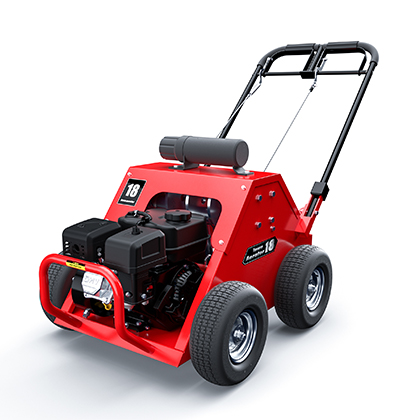
Whether using a walk-behind or ride-on model, the basic principles are the same:
Plan Your Path:
Work along the length of the lawn, similar to mowing.
Move at a steady pace in straight lines.
First Pass:
Cover the entire lawn once. This will leave uniform holes or slits across the surface.
Cross-Aeration (Highly Recommended):
For best results, make a second pass perpendicular (90 degrees) to the first. This creates a grid-like pattern, significantly improving air and water penetration.
Handling Soil Plugs:
Plugs from core aeration can be left on the lawn. They will break down naturally over several days to weeks (depending on weather and watering), returning valuable organic matter to the soil.
If the plugs are unsightly or hinder movement, you can break them up with a rake or mower when they are partially dry to help them decompose faster.
Step 4: Post-Aeration Care (Key to Promoting Growth)
Aeration creates opportunities—follow-up care ensures maximum benefit.
Fertilize and Overseed Immediately (Optimal Timing):
The holes created by aeration provide perfect slots for fertilizer and grass seed.
Seeds and nutrients will fall directly into the holes, improving seed-to-soil contact and enhancing germination and nutrient uptake.
After spreading seed and fertilizer, lightly rake the surface to help work the seeds into the holes.
Water Thoroughly:
Water lightly immediately after aeration to help break down the soil plugs and wash seeds into the holes.
Keep the soil consistently moist for the next 1–2 weeks to support new grass growth and lawn recovery.